

How To Set Up Bike Shoes
Bike-fit is big business. For about £150, y'all can go your position checked by a trained eye at your local bike shop.
Parting company with about 4 times more than cash will become you lot a physio-led fit with biomechanical assessment as standard; and if money's no object, yous can take it one step farther with aero-optimisation in a wind tunnel.
Alternatively, you could practice information technology yourself — without paying a penny.
>>> Route bike size guide: how to cull a bike that fits
Cyclists take been self-fitting for decades, of course, oftentimes with the aid of a friend, a mirror, and a trusty plumb line. Is paying someone else to set you up on your wheel similar ownership a domestic dog and barking yourself? Then again, is DIY fitting a risky business inviting injury troubles? Keep information technology uncomplicated and save cash, or pay the experts to see you right — which arroyo pays off in the long run?
It's a question on which sometime Team Sky consultant and British Cycling physiotherapist Phil Burt is surprisingly candid: "I once stood up at a bike-fit briefing and said a pretty controversial matter: not everyone needs a cycle-fit.
"Some people — who I telephone call micro-adjusters — are more vulnerable to changes in their environment and contact points. Others, who I call macroabsorbers, tend to be able to blot small changes — their prepare-up may not be optimal, but it won't hurt them."
Few people understand the importance of correct position ameliorate than Burt, and yet: "Not anybody can afford a bike-fit, and y'all might be able to use rules of pollex to sort yourself out."
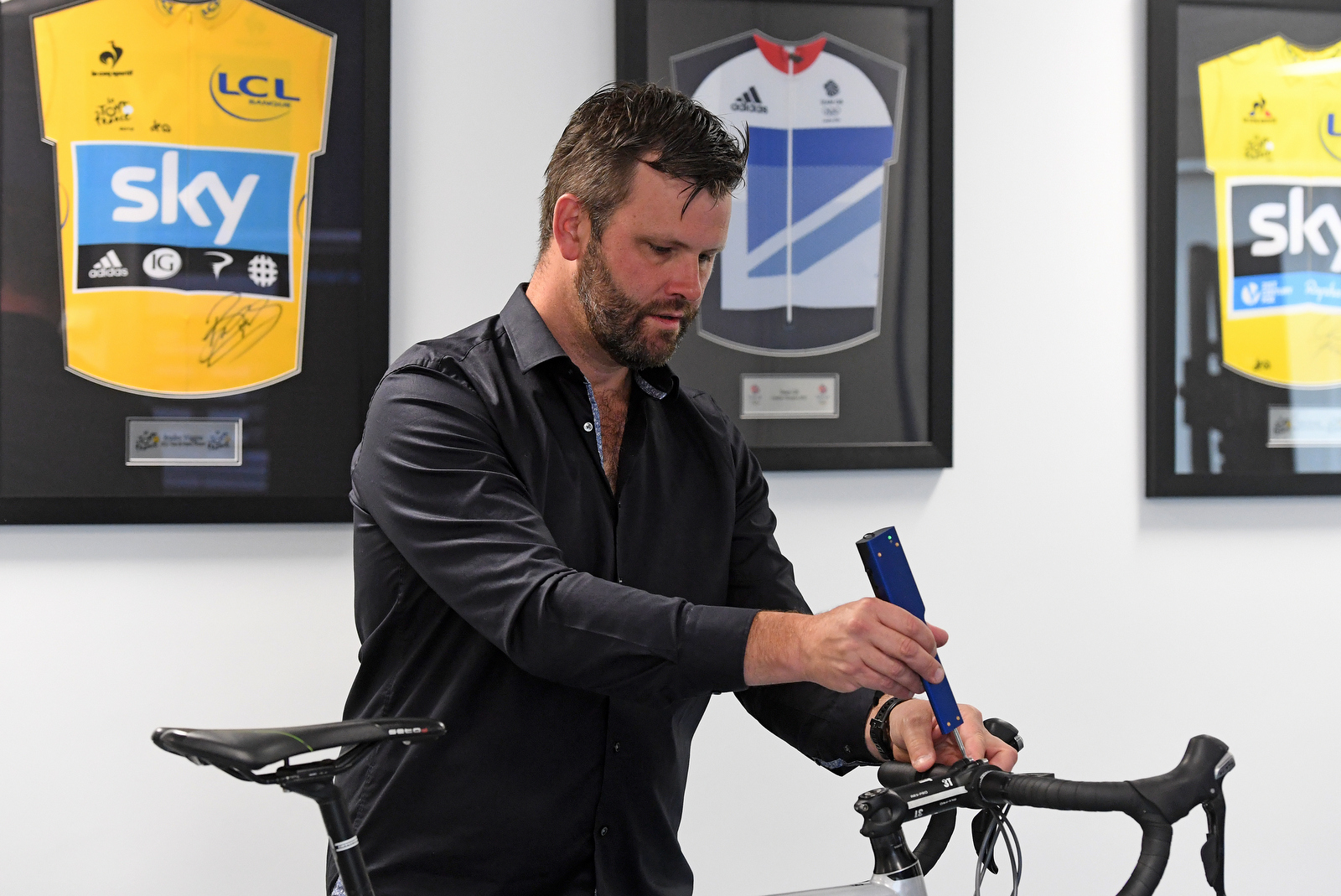
Phil Burt says adjustments need to exist made over time. Epitome: Andy Jones
(Prototype credit: Picasa)
At his eponymous studio Phil Burt Innovation, the bike-fitter extraordinaire wrote his book Bike Fit (opens in new tab) to assist other people do his job for him. Naturally, a book-guided fit is substantially simplified, with more rules of thumb and fewer individual considerations.
The self-plumbing equipment approach is likely to work better for 'macro-absorbers' — people who barely notice if their saddle shifts a centimetre.
For microadjusters, self-fit might non be brash. Physiotherapist at Velophysio (opens in new tab), Nichola Roberts, told us: "I would say a self set up-up is possible just not advisable. If you are going to do information technology, use guideline measures to put you lot in the correct ballpark, merely be prepared to get by feel and tweak as you lot feel comfy."
And there'south no shame in asking for aid. "Enquire a friend who has some bike cognition to observe y'all or movie you on a turbo trainer, from behind and in front. If you lot are getting any discomfort or pain, seek professional help."
DIY bike fit: how exercise y'all do it yourself?
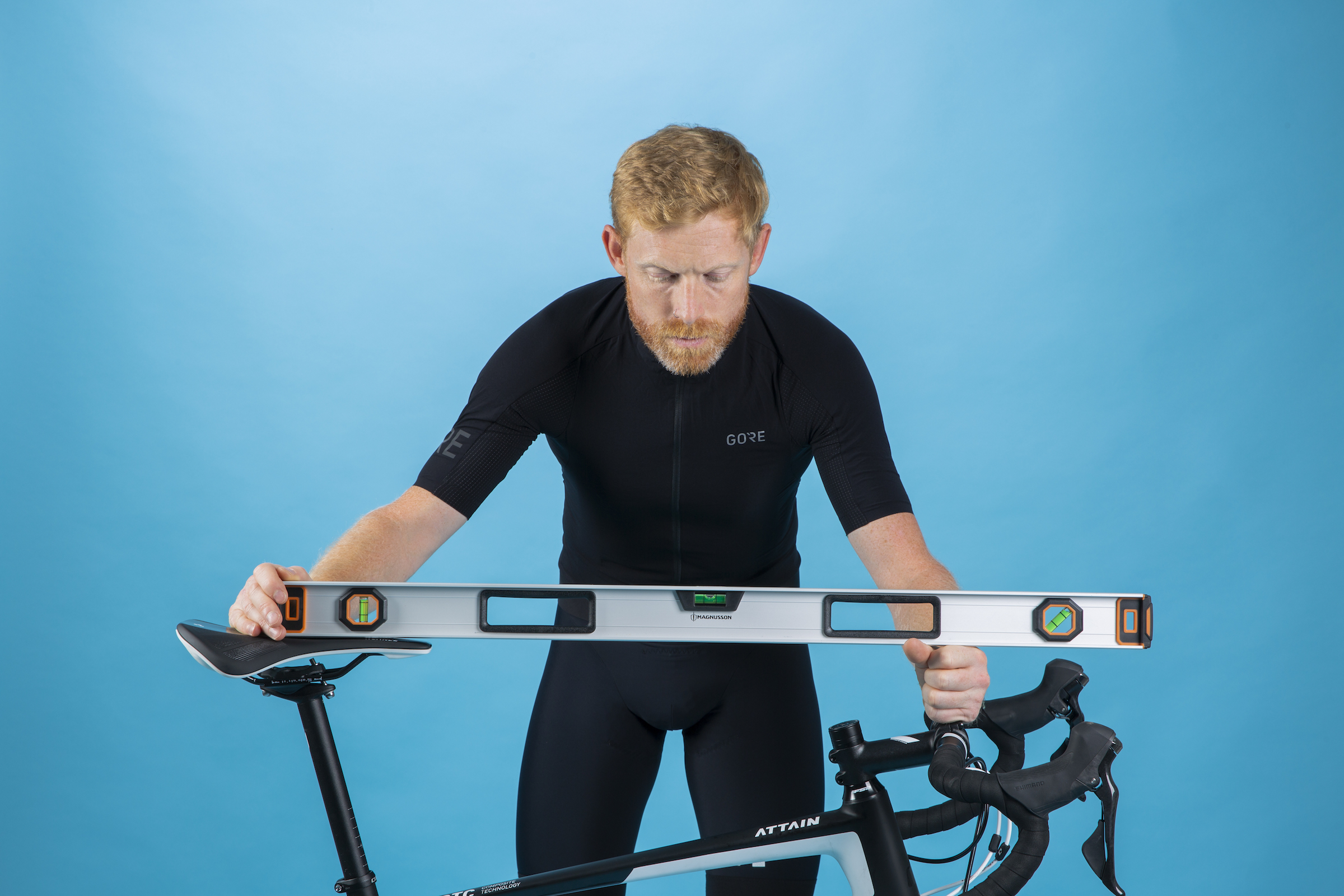
There are a number of tools yous can use to get your set up dailed in.
(Image credit: Cycling Weekly / Dan Gould)
Bike brand Canyon is famous for the good value it offers, largely afforded by the direct-merely sales method it employs.
The German manufacturer knows that its customers are ownership online and many of them, rightly or haphazardly, fit themselves to their purchases.
Daniel Heyder, one of Canyon'due south product engineers, helped run us through the process of a bones self-set up-upwards.
Start at the cleats
It's very easy to rush at the bike, Allen keys in hand, but really good cycle-fit begins with the feet. The cleat-pedal contact is fundamental to comfort.
When you lot're riding clipped in, your feet are the most locked-in component of your body. Misalignment can accept a ricochet effect the whole fashion upwards the chain, from ankle to knee to glute and lower dorsum.
The almost popular method for fitting cleats is to put your shoes on and feel, beneath the soft upper of the shoe on each side of the foot, for the bony protrusion on the inside (first metatarsal head) and outside (fifth metatarsal head).
Mark each with a sticker; draw a line through the 2 points, then identify the center of the cleat on this line.
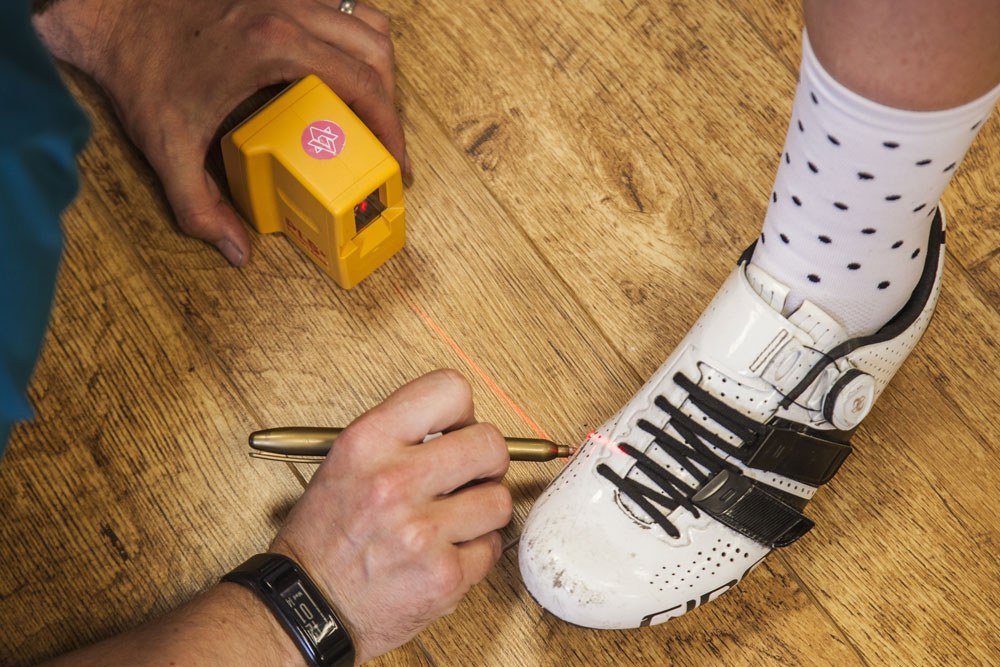
Orientation is important too, and according to Heyder should follow your "natural stance".
To ascertain this, sit on the edge of a table and permit your anxiety hang loose. Inquire someone to expect at the angle of your feet (if yous look yourself, you lot'll subconsciously self-correct) — they'll naturally turn slightly in or out. Ready your cleats at the respective angle to friction match.
Cleats can be adapted to account for differences in opinion width — the altitude between your hips — merely the degree of adjustment available is limited. If you accept wide hips, information technology may be worth investigating Speedplay pedals, where longer spindles can be used to bring the feet out, helping to straighten out knee tracking.
>>> More particular? Read about cleat set up in-depth
Cleat position troubleshooting
Nichola Roberts says: "Where people often become wrong with cleats is that they don't take into account where their anxiety naturally hang when the leg is bent or at residuum. So they either put not enough or also much rotation into the cleat. This ordinarily results in pain on the outside of the knee, or behind the knee.
"Cleats that are besides far forwards or too far dorsum by and large result in genu hurting. Information technology's rare that you actually feel information technology in the foot. I'd unremarkably suggest that if yous've changed your cleats, be aware of any twinges in the knee — and respond by making movements in small increments. When you come to modify cleats, draw around them, and then draw lines from your outline at central points, and take a photo."
Find the right saddle position
Start with your saddle in a flat position, advises Heyder — apply a spirit level set information technology to nix degrees, or at well-nigh plus or minus half a caste.
For saddle tiptop, the basic formula is to multiple your inseam summit by 0.885 — the resulting measurement should exist the distance from the center of the bottom bracket and top of the saddle.
This longstanding equation is called the 'LeMond Formula', subsequently the famous American cyclist — though information technology was actually his French coach Cyrille Guimard who came up with it.
The algorithm seems to have stood the test of time, merely doesn't accept into account differences in pedal shapes, shoe soles or creepo length. Information technology besides assumes that all cyclists take the same dimensions and level of flexibility — which they don't. It's a ballpark estimate, but will go you lot into the correct region.
The culling is to drop the creepo to total extension and residuum your heel on the pedal, setting the saddle height at the bespeak where the leg is entirely straight (and therefore has a soft curve when clipped in).

'KOPS' (human knee over pedal spindle) is used to find the correct fore/ aft (front/back) position of the saddle. While clipped in, with the cranks horizontal, drop a plumb line from the back of the kneecap to the pedal spindle — it should pass through the kneecap and pedal spindle.
>>> More than detail: how to set your saddle meridian
Saddle position troubleshooting
Nichola Roberts says: "If you lot become hurting or aching at the front of the genu, information technology may well mean the saddle is also low, which increases the angle at the height of the stroke, creating more force through the front of the knee joint. If it's besides high, you tin experience pain at the back of the knee, around the hamstrings or ITB. It tin also give you back pain, from movement in the saddle, and Achilles pain. Deport in mind knock on effects.
"Adjusting fore/aft will change your hip bending. If yous motion the saddle forrad, you open the hip angle; if you become back, you lot close it. I've seen people endure hip pain from the saddle being too far back, and human knee pain from information technology beingness as well far frontwards, merely it's very individual. It'south not all about the saddle, either.
"One thing people tend to overlook is crank length. Anyone who is having back or hip hurting may need to consider shorter cranks. Bike frames are quite arbitrary in their measurements. If you lot take a long body and brusk legs, yous will likely need a longer bicycle, with the saddle height lower. If you're on 175mm cranks, this might mean your hip bending is airtight as you pedal — but a shorter crank could open that upwards. Shorter cranks could besides assistance someone who is less flexible, and perhaps can't put the saddle as loftier."
Don't forget: making adjustment to fore/ aft affects saddle elevation. If you move the saddle dorsum, it'll increase the height, go forrad and you'll see a decrease — always re-measure pinnacle after making set-back adjustments. If you change your creepo length, remember to add or decrease the relevant distance from your saddle elevation
Accommodate your reach
This is where things become a bit more personal. Your optimum, explains Heyder, will come downward to "experience, personal preference, body anthropometrics, aerodynamics and body mobility. Many experienced riders tend to go longer and lower in the front end due to a better body mobility."
He suggests that yous aim to maintain a relaxed bending — 160 to 170° — betwixt your lower and upper arm. The drib you desire on the front end end will alter over time, too.
>>> Is your wheel gear up-up too aggressive?
"As a beginner, start off with the maximum spacer summit and decrease the number of spacers used over the form of the season — your body volition adapt appropriately if you lot make the changes slowly."
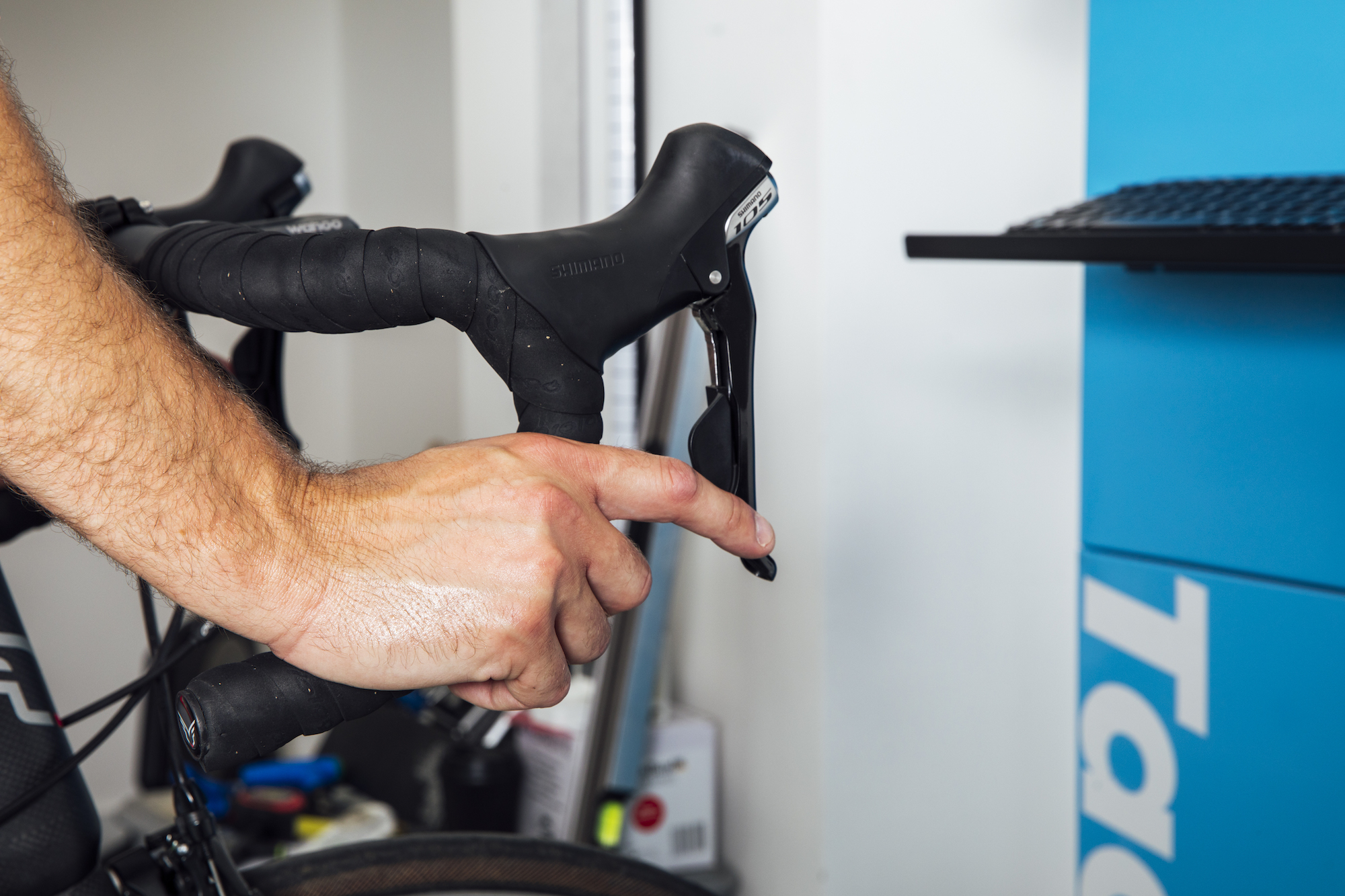
It'south worth remembering that handlebars play a vital role in achieve, and bars that are also broad add extra distance. The ideal width commonly mirrors the altitude between the ii bony protrusions on your shoulders.
>>> More than detail: how to set your reach
Troubleshooting accomplish
Nichola Roberts says: "The ideal position is one with a soft bend in your arms. Y'all shouldn't experience like you're putting an enormous weight through your hands. Never put the saddle forward to cater for a reach that is too long. Once you have the back cease right, don't motility information technology — reduce reach with a shorter stem. Don't ignore warning signs.
"Shoulder and wrist pain are signs of handlebars that are too wide. Check yourself in a mirror — look at the width of your shoulder, your arms should fall straight to the handlebar."
DIY bicycle-fit: for or against?
Sorting your own wheel fix-upwardly… is information technology a shrewd fashion to save cash or stingy simulated economy that risks needless injury?
Yeah, you can do it yourself
Michael Hutchinson, former national champion and CW columnist believes it's possible to do a adept task on your ain.
I'thou not sure anyone had even heard the term 'bike-fit' until about 2001. Before that, you might have had someone in the wheel shop give you a await-over or (even longer ago) had a custom frame builder apply some home-spun wisdom.
Just about people did it themselves. There were a few formulae around for saddle summit — within leg times 0.883 was the 1 I used, and my saddle remains that elevation to this twenty-four hour period — and some rules-of-thumb, like the guideline that when you were on the drops your view of the front axle should exist obscured past the handlebar.
The body is pretty adjustable, and a few millimetres one way or another is the sort of thing that most people can absorb quite well — so the crude mode worked fine for virtually. If it didn't, of course, it was more complicated. Discomfort, injuries, saddle-sores… a fitting can solve all of these. Simply there's probably not much harm in having a go yourself first.
No, check in with a fitter
Peter Weir, bike-fitter at Bicycle Fit Lab, Ballymena, (opens in new tab) Northern Ireland reckons you should never try and practise information technology yourself
I would encourage every cyclist to have a professional bikefit. It is amazing how many people recollect that numb hands and anxiety, saddle discomfort and knee pain is a normal by-product of road cycling. It really isn't. A good bike-fitter will be able to solve these problems (in the absence of underlying injuries).
The most common upshot that I run into in my studio is poor cleat alignment and saddles much also high, leading to knee pain. Adept cycle-fitters exercise non fit by numbers, they work with the rider to find their optimum position based upon said rider'due south unique bio-mechanics and feedback — improving condolement, preventing injury, increasing efficiency and often even power.
Talk to your local bike-fitter — ask what they can exercise for you lot. If they talk about their software and system more than talking nearly you and your needs, effort another fitter.
Reasons to pay for a bike fit
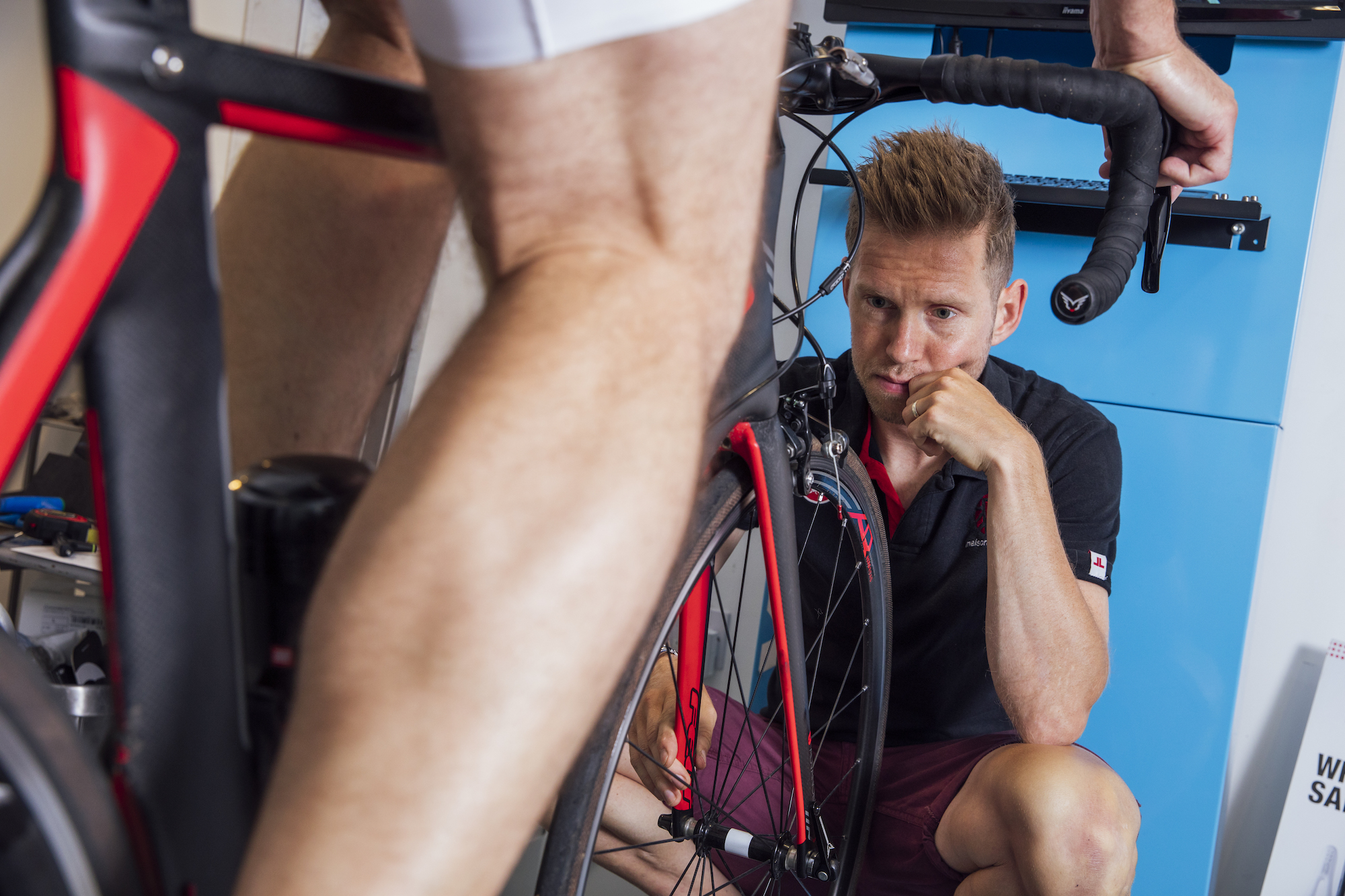
Paul Drake, an experienced bicycle-fitter at Maison du Velo in Reigate (opens in new tab), Surrey, points out that, even with his experience, he doesn't try to practise his ain fit.
"I don't really advocate doing it at domicile," he says. "It's really tricky because you haven't got anyone looking at yous. You've got all the quondam adages, simply guidelines based on multiplying your inseam length by a set figure are very rough, based on averages."
Using a plumb line single-handedly is awkward and it's easy to make mistakes.
"The difference between DIY and a wheel-fit carried out by a professional person is that the pro will first spend fourth dimension getting to know your parameters, in terms of your body, where you lot have tightness, imbalances and rotations that you tin't measure out yourself — then translating that on to the bike."
A good bike-fitter will assess the range of movement you take in your hamstrings, your pelvic rotation, and how much you lot rotate forwards on the saddle, all of which touch your reach. Those biomechanical elements are then factored-in to accomplish, saddle height and fore/aft.
"Fifty-fifty if y'all're a new cyclist," adds Drake, "I'd advise y'all to bite the bullet and get a fit on your outset bike. You lot can cause yourself so many avoidable issues with bad fit. And as a beginner, y'all're a bare canvas — arguably information technology'south the best time to develop optimal muscle patterns."
Transferring wheel-fits
Regardless of whether you've set yourself upwardly or had a professional wheel-fit, in that location will come up a time when you want to prepare another bike to replicate your chief machine. That could be when renting on vacation, or during the excitement of 'new bike twenty-four hours'.
Were all bike geometries, saddles and handlebars equal, this would exist an easy job — but they're not.
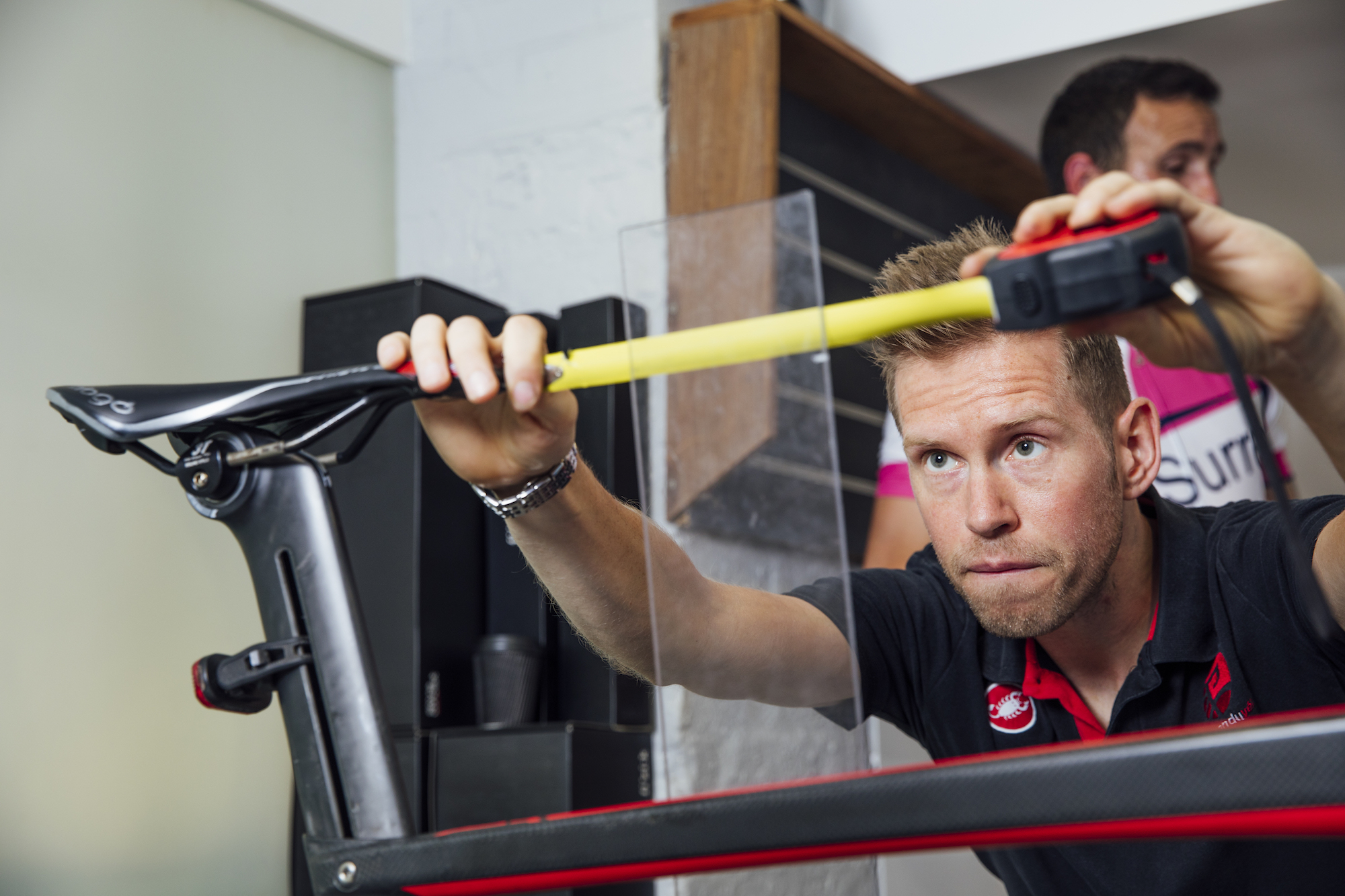
Saddle height is fairly simple: measure from the eye of the bottom subclass to the top of the saddle, and you can go the angle right with a spirit level. Fore/aft can be harder, simply there are several, not inexpensive, tools specifically designed for this job — or you could brand your ain. Drake uses a clear piece of Perspex cutting into a 'T' shape.
"I set the wheel up on a turbo trainer or in a stand up so it's level, so run the directly line from the centre of the bottom subclass. 9 times out of ten, the line is falling in front of the saddle. The correct layback is the distance betwixt the tip of the saddle and the edge."
This just works if y'all're using the same saddle. If non, y'all'll demand to take into account whatever departure between the lengths of the two perches. An alternative pick is to apply a builder's light amplification by stimulated emission of radiation, instead of the Perspex plastic, to shine a straight line through the bottom subclass.
Reach can exist measured by checking the distance from the centre of the saddle to the tip of the hood. If you want precision fabricated easy, there are all-in-one tools available. VeloAngle (opens in new tab), for instance, uses polar coordinates to establish the relative position betwixt the saddle, bottom bracket and bars.
This allows for precision and repeatability — but will ready you back (from) £159. This does not include the accompanying app, which allows you lot to plug in existing measurements and calculate the x/y coordinates required for a completely different bike.
When to adjust your fit?
The optimum bicycle-fit for you is not a gear up of coordinates etched into stone.
Phil Burt once more: "Many people volition have a bikefit, become put in i position, and and then leave it. Simply bodies are adaptable, and the bicycle is adjustable — the correct fit is a wedlock between the two."
>>> Five reasons get go a fresh wheel fit
Conduct in mind that your adjustability changes over fourth dimension, advises Burt: "There isn't i ideal position, merely there'southward definitely an optimum window for each measurement, height, saddle fix back and reach."
The of import thing is to recollect to stay within your comfortable window, and to make minor changes, gradually. Test your aligning with some shorter rides, and never make big changes ahead of a long day out.
Source: https://www.cyclingweekly.com/fitness/bike-fit/set-up-new-road-bike-370764
0 Response to "How To Set Up Bike Shoes"
Post a Comment